Nancy Mapes will celebrate her second “lungaversary” in July 2026, marking two years since the life-saving double lung transplant that transformed her life. More than just a milestone, it reflects Nancy’s optimism and determination that have made her an inspiration for people navigating their own transplant journey.
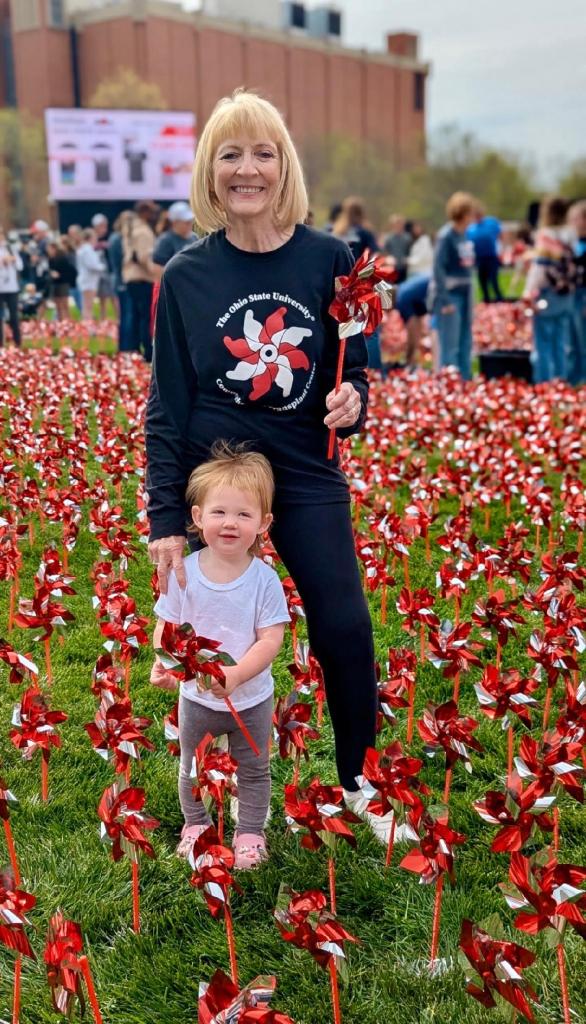
Nancy and I chatted about her transplant story in a virtual interview. She was cast on my screen in a bright red blazer with a Donate Life pin fastened carefully to the lapel. Earlier that day she had attended a BalletMet dress rehearsal, one of the many ways she is engaged in the community, all the while continuing to advocate for organ donation awareness.
Nancy was diagnosed with idiopathic pulmonary fibrosis, a disease that causes irreversible scarring of the lungs and gradually makes breathing more difficult. As her physical abilities declined, her mindset remained strong. She walked at least three miles a day in her neighborhood then moved to malls where the floor was more even so she could continue her streak. After her symptoms progressed further she depended on supplemental oxygen, up to 15 liters of oxygen at rest which is a level that requires extensive equipment and dramatically alters everyday life. She was unable to go many places, but hauled her oxygen tanks to pulmonary rehabilitation and doctor’s appointments. Her mantra became: “If I’m stronger going in, I’ll be stronger coming out.”
Nancy’s hard work before transplant paid off. After receiving her double lung transplant, she spent only eight days recovering in the hospital before returning home. The improvement in her quality of life was immediate and profound. “I cried after cooking a meal,” she told me. “It was something I did not have the energy to do before.” It was a reminder of how easily life’s smallest moments can be taken for granted until they are suddenly taken away.
I first met Nancy through The Ohio State University Medical Center’s lung transplant support group, a monthly gathering for pre- and post-transplant patients. She immediately jumped at the opportunity to share her story as she wants to help as many people as she can through the process. I saw her again at an Lifeline of Ohio event where we had the opportunity to hear other transplant recipients, living donors, and donor family members stories. Once again, Nancy stood out because of the hope she gave others through her perseverance and optimism when things were tough.
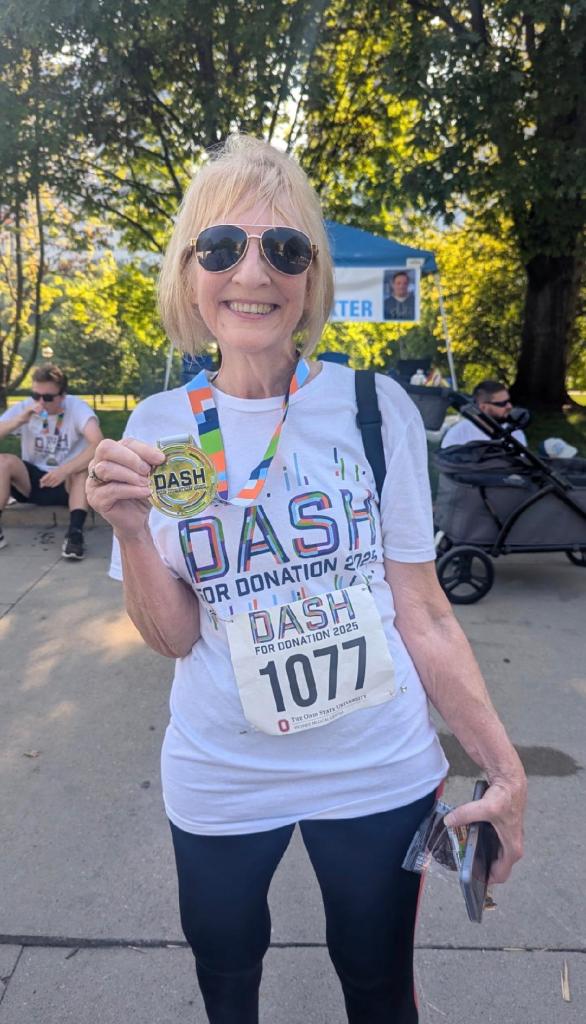
Post-transplant, there is a required pulmonary rehabilitation program. After your sessions, you’re free to continue exercising elsewhere, or if you choose, you can sign up for the pulmonary maintenance program offered at the OSUMC facilities. Nancy opted for this extended program based on the care and community. “It’s like a family,” she said about the staff and fellow patients at OSU CarePoint East. “Everything I do [at OSUMC] I can do at the Y, but I don’t want to leave them!” The one activity she joked about pulmonary maintenance lacking is line dancing, something she happily continues elsewhere.
A year before her diagnosis, Nancy and her husband, Bill, retired and took on a new chapter of adventures. Her family always enjoyed Amtrak vacations since their kids were small, especially in the Southwest. After her daughter and son-in-law relocated to Arizona, Nancy and Bill often went out to visit, traveling by rail on routes such as Albuquerque to San Francisco. “There was nothing better than just being together,” Nancy said. “He’s my person.” That love became another source of strength during her illness. Then, tragedy struck two and a half months after her transplant when Nancy’s husband unexpectedly passed away. “I am forever thankful that he got to see me better,” she said. “He was very concerned.”
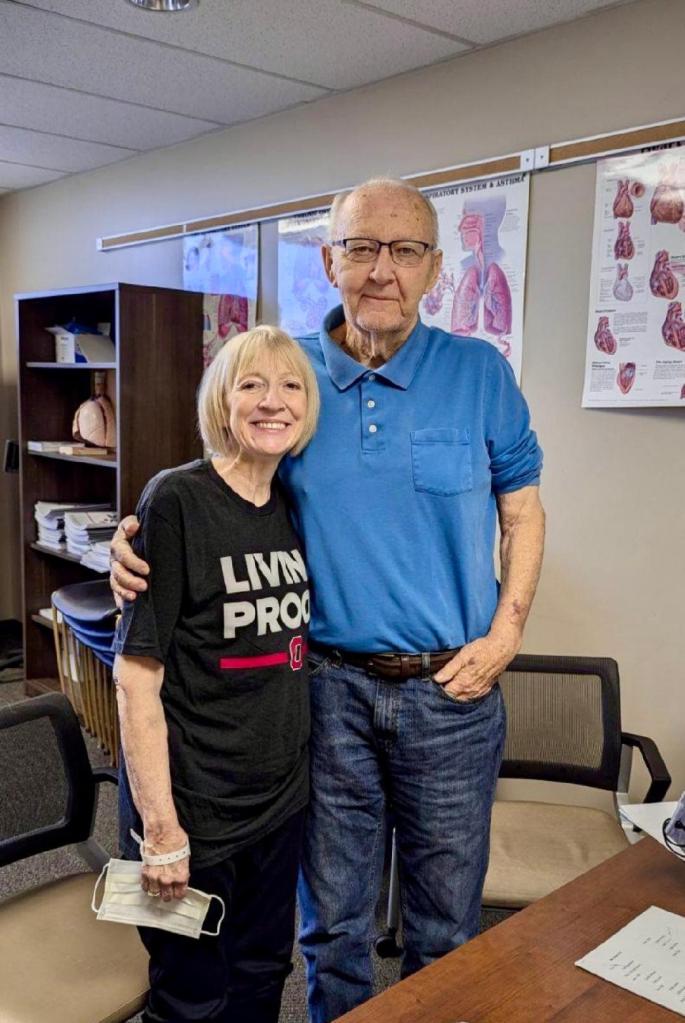
Aside from a brief hospitalization for Clostridioides difficile (C. diff), Nancy’s recovery has been remarkably smooth. With exercise and an active life, she’s feeling better than she ever has!
Today, Nancy continues to pour that same source of love and care into others. She volunteers with nonprofit organizations, attends Bible study groups, cheers for the Cleveland Guardians, and continues sharing her transplant story whenever she can. Whether she is speaking with transplant patients, advocating for organ donation, or simply wearing her Donate Life pin around town, Nancy embodies what it means to keep living fully through determination and compassion. She exemplifies what it means to be living proof that life after transplant is possible and vibrant.

